

Having an immigrant petition approved by the United States Citizenship and Immigration Services (“USCIS”) is an important milestone, but for many applicants living outside the United States, it is not the end of the immigration process. Following USCIS approval, the case moves to the National Visa Center (“NVC”) which is under the Department of State (“DOS”).
The NVC processing involves creating a case number, paying visa application fees, collecting and submitting documentation and waiting for the case to be transferred to a U.S. Embassy or Consulate.
At Enterline Immigration Consulting our U.S. immigration attorneys represent clients in Asia through the different stages of the immigration process, including family-based immigration cases, K-1 fiancé(e) visa cases, and EB-5 immigrant investor cases.
In this guide, we will walk you through what happens after USCIS approval, what to expect from NVC processing and how to prepare for the consular processing stage of your case.
What Is the NVC?
The NVC is an office under DOS that handles immigrant visa cases in between USCIS approval and an interview at a U.S. Embassy or Consulate.
.For immigrant visa cases, NVC may:
- Categorize the DOS visa category;
- Assign an NVC case and invoice number;
- Send instructions to the petitioner, beneficiary and the attorney-of-record;
- Collect required filing fees;
- Receive and review civil and financial supporting documents;
- Coordinate appropriate U.S. Embassy or Consulate to schedule an interview after the case has been documentary qualified.
The NVC does not conduct the visa interview or make the final decision on whether to issue an immigrant visa. A DOS consular officer at a U.S. Embassy or Consulate makes that determination at the time of the interview.
What Happens After USCIS Approves Your Petition?
What happens next depends on both the immigrant benefit being sought and where the beneficiary intends to complete the immigration process.
1. CR-1 and IR-1 Spousal Visa Cases
After USCIS approves a Form I-130, Petition for Alien Relative for a foreign national spouse, the NVC creates the case, collects the required fees and allows the petitioner and beneficiary to complete the necessary steps through the Consular Electronic Application Center (“CEAC”). This includes the Form DS-260, Immigrant Visa and Alien Registration Application (“DS-260”), Form I-864, Affidavit of Support (“Form I-864”) and supporting financial and civil documents.
Once NVC accepts the required submissions, the case becomes documentarily qualified.
2. EB-5 Immigrant Investor Cases
An EB-5 investor pursuing consular processing may also have the case transferred for Department of State processing after USCIS approves Form I-526 (Immigrant Petition by A Standalone Investor) or Form I-526E (Immigrant Petition by Regional Center Investor). Approval alone does not allow the investor to enter the United States as a Permanent Resident.
Because EB-5 is an employment-based immigrant visa category subject to annual visa limits, visa availability and the investor’s priority date can affect when the case can move forward. The Department of State publishes visa availability information each month in the Visa Bulletin.
EB-5 cases also differ from family-based cases in their financial sponsorship requirements. For example, the Form I-864 normally associated with family-sponsored immigrant visas is not automatically required simply because an applicant is immigrating via the EB-5 visa category.
3. K-1 Fiancé(e) Visa Cases
The NVC process for K-1 fiancé(e) visas are processed differently. After USCIS approves a Form I-129F, Petition for Alien Fiancé(e) (“Form I-129F”), the case is sent to NVC. While NVC assigns a case number, no additional filing fees are paid to the NVC nor does the NVC collect documents ahead of a K-1 fiancé(e) visa interview. Instead, the NVC sends the file to the U.S. Embassy or Consulate that will process the remainder of the case.
In addition, K-1 fiancé(e) visa beneficiaries do not complete a DS-260 but complete a DS-160, Online Nonimmigrant Visa Application.
If you are unsure what to do after your approved petition reaches NVC or the U.S. Consulate General, our U.S. immigration attorneys can help you understand the next steps and prepare for the consular stage. Contact our office today.
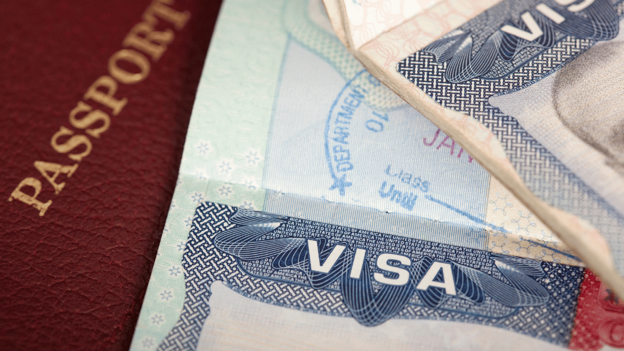
U.S. visa stamp.
When Do You Receive Your NVC Case and Invoice ID Number?
After NVC receives an approved immigrant petition from USCIS, it categorizes the DOS visa type file and assigns an NVC case and invoice ID number.
These numbers are important because they allow the petitioner, beneficiary or attorney-of-record to access the case through CEAC and complete the required processing steps.
The NVC fees cannot be paid nor can any documentation be submitted until the NVC has created the case and invoice ID number.
Important: Do not confuse the NVC case number with the USCIS receipt number.
What Documents Does NVC Require?
The required documents depend on the DOS visa category and the specific case facts.
For a typical family-based immigrant visa case such as a CR-1 or IR-1 spousal visa, the NVC normally requires the following:
- Form DS-260;
- Form I-864;
- IRS tax transcripts and other financial evidence from the petitioner;
- Passport biographical page;
- Birth certificate;
- Marriage certificate;
- Divorce or termination-of-marriage records, if applicable;
- Police certificates when required;
- Court or criminal records when applicable;
- Military records when applicable; and
- Other civil documents required for the beneficiary’s home country or residence;
The petitioner and beneficiary must follow DOS’s country-specific documentation requirements through the DOS Reciprocity Schedule.
Beneficiaries are strongly recommended to review the requirements for civil documents rather than assuming that any version of a birth, marriage, divorce or police record will satisfy NVC.
What Does “Documentarily Qualified” Mean?
A case becomes documentarily qualified when NVC determines that the necessary fees have been paid and the required immigrant visa application and supporting documents have been submitted and accepted. The NVC then works with the appropriate U.S. Embassy or Consulate to schedule the immigrant visa interview.
However, becoming documentarily qualified does not guarantee an immediate interview date. Interview timing can depend on factors including:
- Appointment availability at the Embassy or Consulate;
- The DOS visa category;
- The date the case became documentarily qualified; and
- Visa availability for categories subject to annual numerical limits.
For numerically limited categories such as EB-5 and certain family preference cases, an applicant may be documentarily qualified but still have to wait until an immigrant visa is available.
How Long Does NVC Take in 2026?
There is no single fixed NVC processing time in 2026.
The NVC publishes updated timeframes showing both how long it is taking to create cases received from USCIS and which document submissions it is currently reviewing. These figures change regularly.
For example, as of August 10, 2026, NVC reported that it was creating cases received from USCIS on July 23, 2026, and reviewing documents submitted on June 24, 2026. Because these dates are updated weekly, applicants should check the DOS current NVC timeframes page rather than rely on an older estimate.
What Happens After the U.S. Embassy or Consulate Receives Your Case from the NVC?
Once an immigrant visa case is received and processed by the U.S. Embassy or Consulate, the next step is the immigrant visa interview.
The NVC coordinates with the appropriate U.S. Embassy or Consulate and sends the petitioner, applicant and the attorney-of-record, if applicable, notice of the scheduled appointment.
After receiving an interview appointment, the beneficiaries are given specific instructions including completing the required medical examination and preparing original or certified copies of documents for the interview.
Beneficiaries should follow the instructions issued for the U.S. Consulate where they will interview.

Applicant checks visa status online.
Frequently Asked Questions About NVC Processing
These common questions explain what to expect during NVC processing, from case creation and document review to DQ status and interview scheduling:
How do I know if USCIS sent my case to NVC?
The USCIS issues a notice following petition approval. After the NVC receives the approved petition, it sends instructions with the NVC case and invoice ID number.
Can the NVC ask me to resubmit documents after they have been submitted?
Yes. If a document is missing, unacceptable or does not satisfy the applicable requirements, additional action may be necessary before the case can become documentarily qualified. Applicants should review CEAC carefully and respond to NVC instructions rather than simply uploading a different document without understanding the problem.
Does a K-1 visa become documentarily qualified at the NVC?
No. While the NVC assigns a case number, it does not issue an invoice ID number. Approved I-129F Petitions are forwarded to the appropriate U.S. Embassy or Consulate for additional processing.
Does becoming documentarily qualified mean my interview will be scheduled immediately?
No. The time between a case becoming documentarily qualified and the interview depends on consular appointment capacity, the visa category and, for numerically limited categories, visa availability.
Obtain NVC Guidance from Our U.S. Immigration Attorneys
The USCIS approval can feel like the end of a long process, but for applicants completing their cases abroad, there may still be several important steps ahead.
Understanding what the NVC requires, submitting the correct documents and responding properly to any problems can help prevent avoidable delays before the consular interview.
If you have questions about NVC processing after USCIS approval, have received an NVC notice you do not understand or are experiencing problems with your case, contact Enterline Immigration Consulting to schedule a consultation.
Our U.S. immigration attorneys assist clients with family-based immigration, fiancé(e) visas, EB-5 immigrant investor cases and consular processing through the U.S. Consulate General all over Asia.
If you have questions about What After USCIS Approval and What is the NVC? (2026 Guide), please contact us at info@enterimmi.com.